
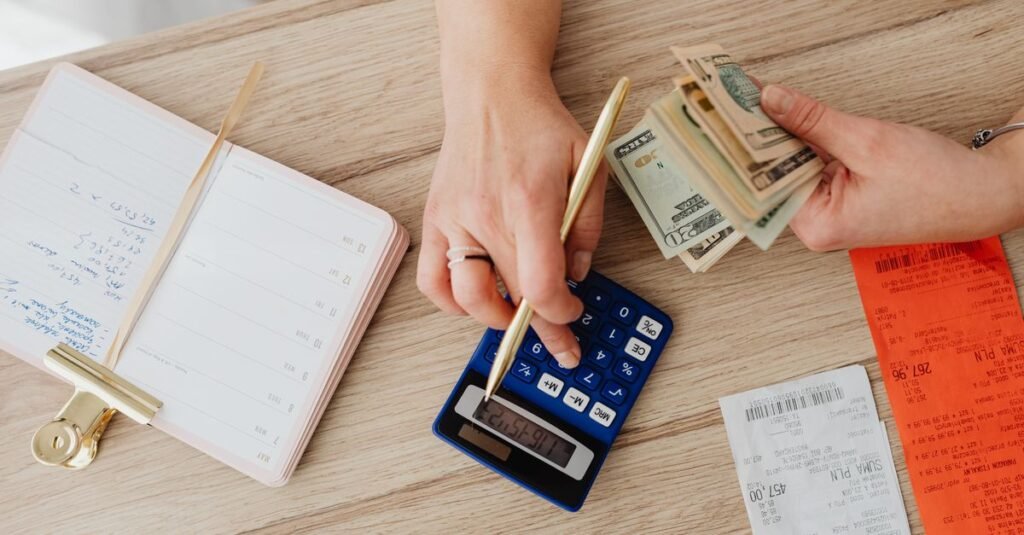
I stared at my bank statement at the kitchen table last month and did the math I always avoid: how did I spend all of this, and where did it actually go? My husband glanced over and said, “We bought a car, right?” No. It was ice cream, a road trip, and a dozen other things I can’t even name.
That’s when it clicked. I’ve started budgets I never finished — January resolutions with 40 categories and a color-coded spreadsheet. They all died by March. But I’m not bad with money. I’m just bad at budgets that depend on my willpower.
The fix turned out to be smaller than I expected: stop budgeting, start managing cash flow. Same money, different system. Here’s what changed for me.
The problem with the word “budget”
Ask most people what a budget is and they’ll say “restrictions.” It has the same energy as the word “diet” — a list of what you can’t have. So of course we hate it.
Most of us assume we’re the problem. That we’re just bad with money because we can’t stick to a plan. But here’s what I’ve learned after years of paycheck-to-paycheck: the problem isn’t your discipline. Traditional budgeting requires constant attention, and life is constantly in motion. Expenses change. Plans shift. A car repair shows up in the middle of the month, and the spreadsheet that looked perfect on paper quietly falls apart.
Flipping the question helps. Instead of asking what I can’t spend, I ask what I am choosing to spend on. That’s cash flow in one sentence: being intentional about where your money goes, so you’re the one in charge of it — not the other way around.
The three-account system that ended the guesswork
This is the part I want you to steal. My financial planner suggested splitting my money across three accounts instead of keeping everything in one checking account. It sounds almost too simple.
1. The committed account
Every month, my recurring expenses get moved here first, before any of it can get spent. Rent or mortgage, utilities, insurance, loan payments, phone and internet, subscriptions — and yes, my retirement contributions ride along here too. That last one is intentional: treating 401(k) savings and Roth IRA contributions like a bill makes them non-negotiable, which keeps my everyday spending from eating into them.
When this account is funded, I know the essentials are covered. I never wonder whether I can afford the electric bill because I’m checking my balance first.
2. The spendable account
This is the money I’m actually allowed to enjoy — groceries, dining out, entertainment, gas, shopping, the little things. Here’s the difference it makes: when I check this account, I know exactly what’s available. I stop making purchase decisions while secretly wondering if I’m accidentally spending next month’s rent.
I don’t feel like I’m on a diet. I feel like I’m spending my money, with a clear ceiling.
3. The annual expense account
Some costs don’t happen every month — and they’re the ones that sneak up on you. Property taxes, car maintenance, holiday shopping, home repairs, annual insurance premiums, vacations. Adding up what I expect to spend in a year and dividing by 12 turns each of those into a small monthly transfer. A small number I barely notice, instead of one giant lump sum that hits when I’m least prepared.
Those expenses stop being emergencies. They become planned purchases, which is a completely different feeling.
Let automation do the remembering
Once the three accounts existed, the next step was making them work while I slept. Automatic transfers on payday mean my bills are paid and my savings are moving before I can talk myself out of it.
The payoff isn’t just the money. It’s the mental load: fewer decisions to make, fewer payments to track, less stress on the busy months when everything is due at once. The less I rely on willpower, the more consistent I get. Good habits that run on autopilot beat good intentions every single time.
Build the emergency fund one small step at a time
Most people quit their emergency fund because they think it has to be a big number before it counts. I used to be one of them — if I didn’t have thousands saved, I felt like I was cheating.
That’s backwards. Every dollar set aside improves your security. The habit matters more than the total. Small, regular contributions compound into real peace of mind: when the car repair or the medical bill or the surprise month of reduced income arrives, I respond from my own account instead of reaching for high-interest debt.
And to be honest about what an emergency fund is not: it won’t fix every financial problem. It just gives you options. Even a modest cushion takes the panic out of the phone call.
Save for today and for tomorrow
Retirement is where I used to lose motivation. The money is decades away — why sacrifice for it? The answer my planner gave me stuck: where motivation is weak, build discipline. Automated savings and investments for the long game, paid like a bill. Paying yourself first is the best kind of payment you’ll ever make.
But I also give myself goals I can actually enjoy in the near future — a family vacation, a home project, a new car, some education, even just a calmer holiday season. Short-term and long-term goals side by side keep saving from feeling like suffering, because I get to celebrate the wins along the way.
Your money mindset is part of the system
Here’s the part spreadsheets don’t cover: our money decisions are driven by emotions, habits, and beliefs we formed years ago. You can know exactly what you should do financially and still not do it, because the feeling wins.
Noticing your own spending triggers changes more than any new app. But be careful about two traps I’ve personally fallen into, and that behavioral finance has names for:
Overconfidence — the quiet belief that I’m too smart to make financial mistakes, which is exactly how I ended up taking on risks I should have planned for. I once predicted the S&P 500 bottom at 3200 and watched it actually bottom at 3491. The market did not care about my spreadsheet.
Herding — doing what everyone else is doing with their money, whether it’s a hot investment, a big purchase, or a spending habit. Cash flow and money mindset expert Stephanie Holmes-Winton makes the point I keep coming back to: the best financial plan is the one designed for your circumstances, not someone else’s.
What to do today
You don’t need a perfect budget or unlimited willpower to get your money under control. You need a system that works consistently, adapts to your life, and makes good decisions easy to repeat.
Here’s your one small step for today: open your bank app and create one new account. Call it “Annual Expenses.” Pick the single biggest cost that hits you once a year, divide it by 12, and schedule the automatic transfer for next payday. That’s it — you just turned your first surprise into a plan.
Slow and steady works. Your cash flow isn’t built in one dramatic decision; it’s built one small, consistent move at a time.
As with any personal finance decision, check the details against your own situation. This is general information, not professional advice — but it’s a good first conversation to have at your kitchen table.