
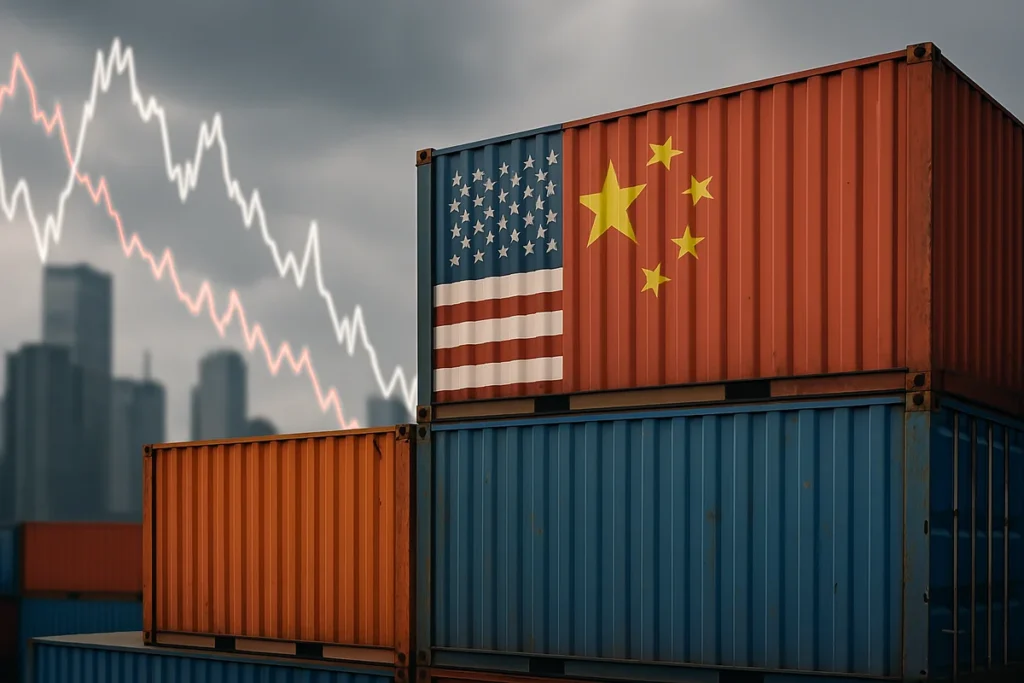
My husband walked into the kitchen last week while I was staring at my brokerage app.
“Still watching it like a hawk?” he asked, pouring coffee.
I told him: “It’s not about watching. It’s about knowing when to sit on your hands.”
Lately, sitting has felt harder than usual.
Tariffs sound smart until you look at the details
Here’s my take: tariffs are probably the most misunderstood part of current trade policy. The goal makes sense — boosting US manufacturing is a good idea. But the tools being used? Not so much.
The best way to strengthen domestic production isn’t burning the system down. It’s strategic investment and subsidies. China figured this out years ago, and it shows in their numbers.
The recent announcement of reciprocal tariffs went further than most economists thought the global economy could absorb without a recession. The big question is whether this is a negotiating tactic or the real deal.
Why markets haven’t collapsed yet
Markets are holding up because everyone hopes for a quick resolution. Historically, we’ve seen this pattern before: exaggerate first, push for a deal, get temporary relief. The new normal usually ends up worse than the old one — but at least it feels like progress.
The selloff has been orderly so far. But here’s how you know when things get serious: watch for a liquidity crisis triggering forced liquidations. You’ll spot it when the dollar spikes while stocks keep falling. Those two moving in opposite directions is your warning sign.
There actually is good news in all this
Everyone complains about how the tariffs are structured — and rightfully so. The administration set them based on each country’s trade deficit divided by its exports to the US, not through any kind of economic modeling.
But here’s the upside: that messy structure actually makes it easier to fix. No new legislation needed. No years-long negotiations with business lobbies or unions. Countries can simply buy more US goods — weapons, energy, anything — and close the deficit gap. It gives everyone a clear path forward.
The data still works (and that’s comforting)
Despite all the uncertainty around trade policy, market data keeps doing its job.
Last weekend, I looked at the indicators and decided against panic. The S&P 500 rallied by 200 points afterward. That felt good — until I checked the underlying signals on Monday.
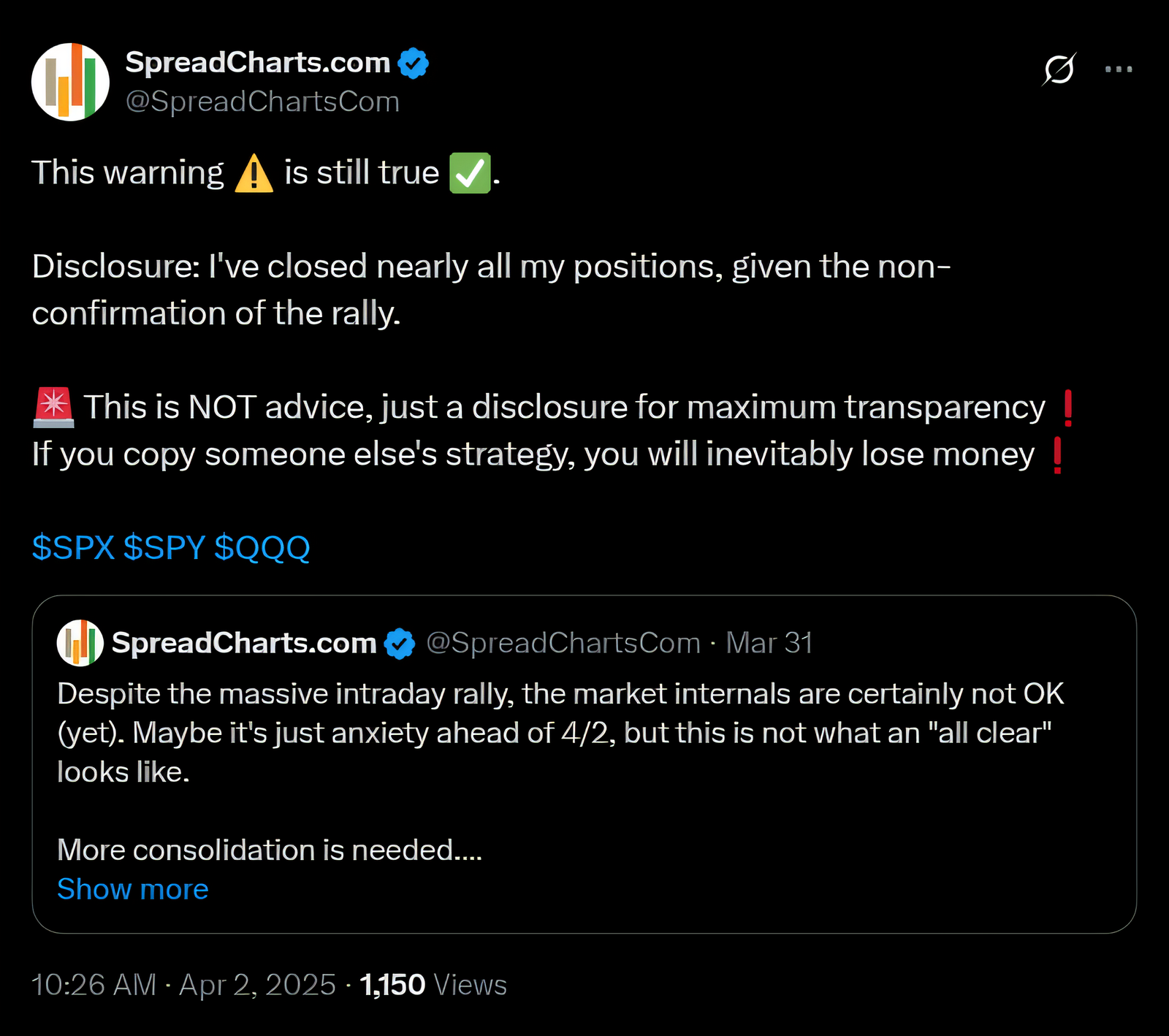
The data didn’t confirm that rally. So I closed nearly all my positions. It’s not advice, just transparency: if you copy someone else’s strategy without understanding your own risk tolerance, it will cost you money at some point.
Where the S&P 500 stands now
I prefer to wait for data confirmation before making moves. Right now, there doesn’t seem to be much slowing this selloff. The first support level sits around 5400, with a major one near 5200 for the S&P 500.
Now, knowing those numbers isn’t exactly rocket science — even my nephew could trace a line on a chart and guess where it might bounce. But the real skill is knowing what to do with that information when everyone around you is either buying or selling in a panic.
Catching falling knives hurts
With negative momentum like this, trying to catch a falling knife is a bad strategy. I’m sticking to my approach: wait for data confirmation before going long again.
I’ll share an update here as soon as the indicators and models give me that signal.
A small step you can take today
If markets are keeping you up at night, try this: write down exactly what percentage of your portfolio is in equities right now. Knowing the number doesn’t change the market — but it does change how you feel about watching it.
Slow and steady beats heroic timing. Every time.