My husband once asked me why I had a chart of iron ore prices on my kitchen whiteboard when I don’t own a single tonne of it.
Honestly, he’s not wrong. But here’s what I’ve learned: the market you watch doesn’t have to be the market you trade.
Why the biggest metal market matters for you
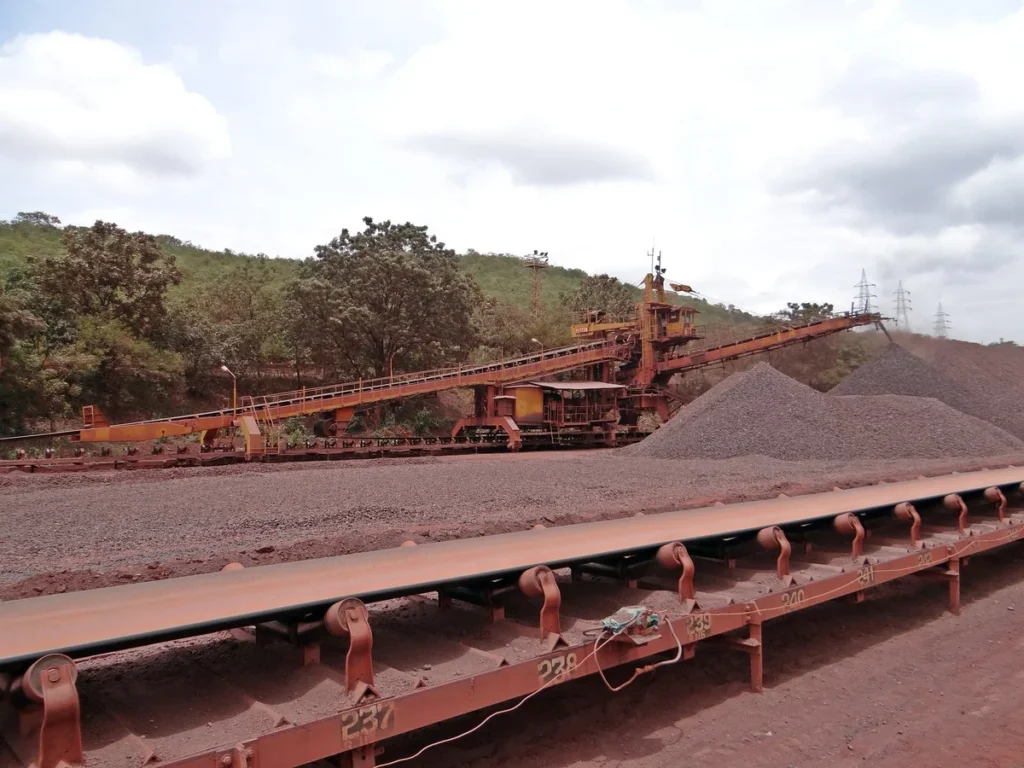
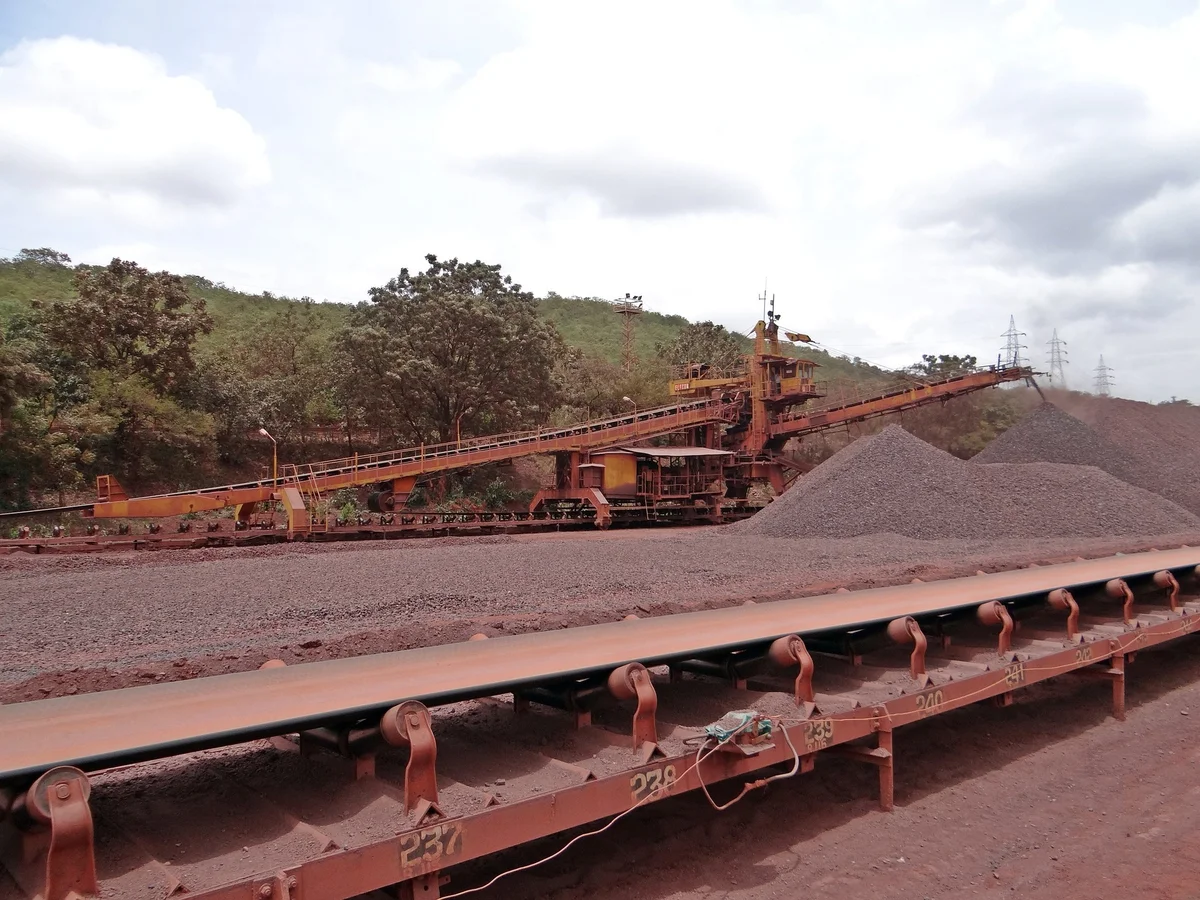
Iron ore is the primary raw material used in making steel. China alone accounts for about two-thirds of seaborne iron ore demand, and much of it flows through the Strait of Malacca. The SGX futures contract in Singapore is one of the world’s key benchmarks.
The iron ore market is huge — much more liquid than something like rubber, which I also follow. Size doesn’t automatically mean better trading opportunities. In fact, smaller markets can give you sharper moves. But watching what happens in the big market tells you where gravity pulls.
Here’s my rule of thumb with metals
I trade metals like silver, copper, and platinum through ETFs. I rarely touch miner stocks. And here’s a pattern that has saved me more than once: there is a hierarchy among commodity groups.
Silver is a tiny market compared to copper. It doesn’t take much money to push silver in either direction, so price swings can be dramatic — sometimes dramatic enough to get detached from what’s actually happening in the physical world.
That’s why I always check copper before committing on silver. Copper is bigger and harder for any single group of traders to manipulate. Silver might lead a rally for a while, but when copper and silver disagree, copper is usually right more often than not. Metal prices ultimately reflect economic conditions, and if the economy is struggling, it’s unlikely one metal will defy gravity just because speculators are excited.
Now take that logic one step further. Iron ore is even bigger than copper. It is the largest commodity market among metals.
A lesson from spring 2023
I still remember when everyone was calling for silver to break above $30 in spring of 2023. The goldbugs were convinced it was inevitable. But copper and iron ore prices didn’t support that optimism at the time.
Markets can surprise you, of course. There have been recent rallies where both silver and copper actually led iron ore — which is unusual enough to pay attention to. The point isn’t that iron ore is always right. It’s that when the biggest market disagrees with the smaller ones, it deserves your skepticism.
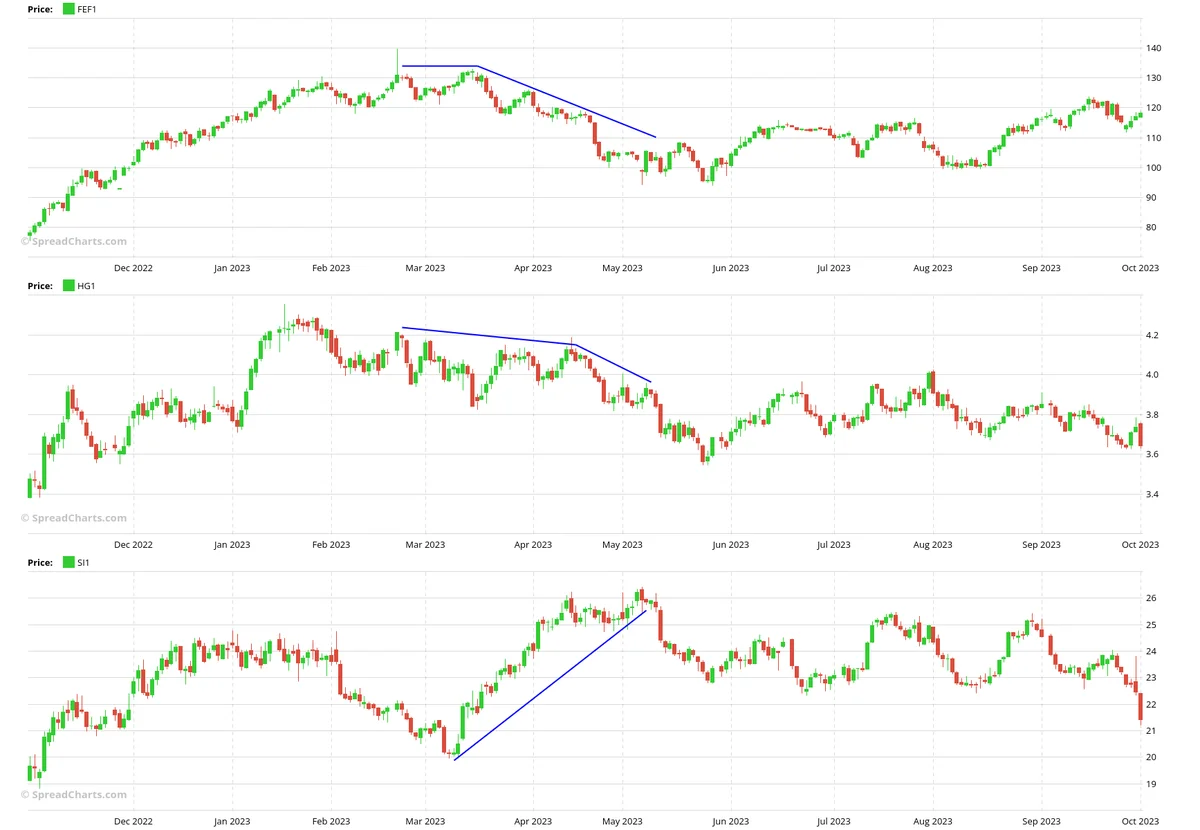
Smaller markets like silver are more vulnerable to speculative squeezes. So if iron ore is underperforming while silver surges, I get cautious, not excited.
What the delivery spreads reveal
Cross-market analysis is useful. But interdelivery spreads — those are where the real short-term signals hide.
We track these daily because they probably give you the clearest picture of actual physical market conditions. They are less prone to broad manipulation and reflect what buyers and sellers are really willing to pay for near-term versus later delivery.
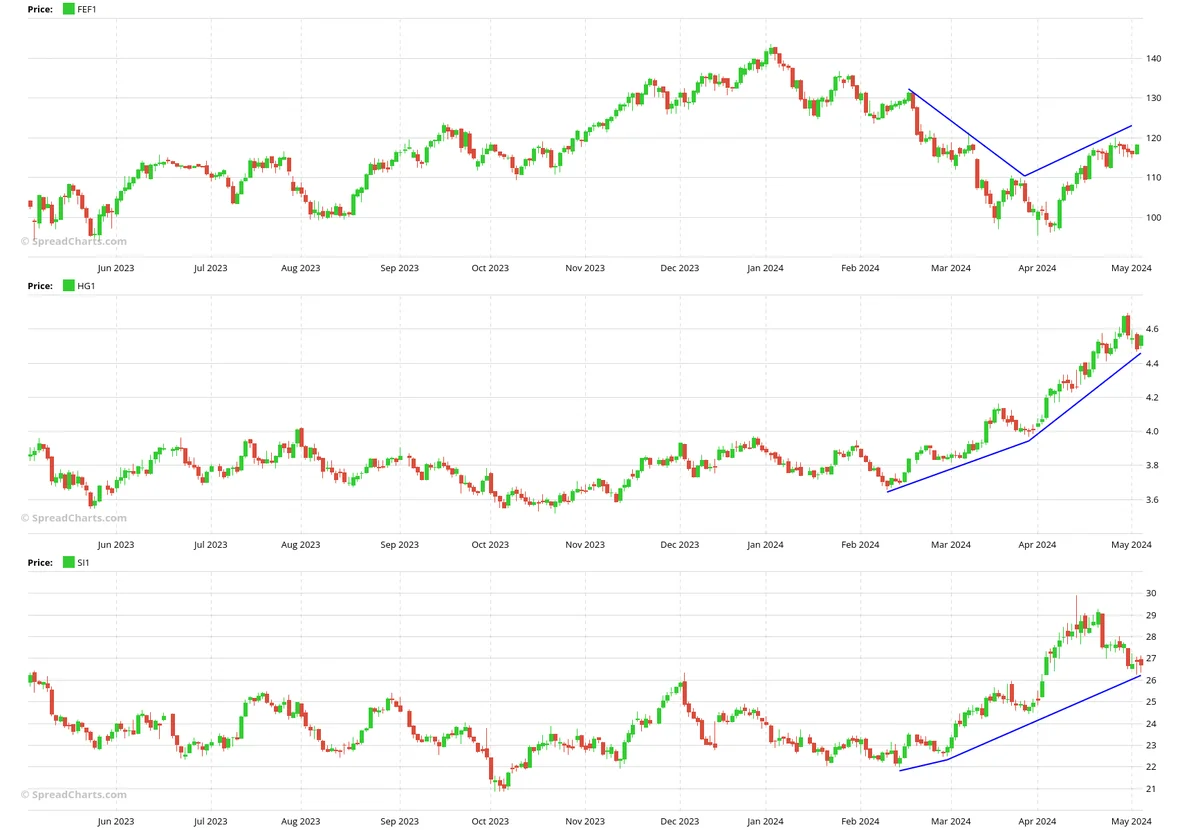
The best opportunities show up when there’s a divergence between the spreads and the underlying price. If that gap persists, the spreads tend to be correct and the commodity eventually catches up. Now, this doesn’t work 100 percent of the time — nothing in markets does. But it gives you an edge.
The iron ore contract, translated
My husband says looking at a futures contract spec sheet is like staring at a celebrity poster I can’t read from this distance. So here’s what those numbers actually mean:
- Contract name: SGX TSI Iron Ore CFR China (62% Fe Fines)
- Exchange: SGX (Singapore)
- Ticker: FEF
- Currency: USD
- Contract size: 100 metric tonnes
- Point value: $100 per point
- Tick size / value: 0.05 / $5
- Settlement: Financial (cash-settled, no physical delivery)
That means each tick movement of 0.05 is worth $5 in your account. And one full point move on a contract representing 100 metric tonnes of iron ore with 62 percent iron content moves $100.
What to do today
You don’t need to trade iron ore to benefit from watching it. Next time you’re deciding whether that silver or copper position feels right, take two minutes to check where iron ore is sitting. If the biggest metal market isn’t along for the ride, slow down and ask yourself why.
Financial confidence builds one informed decision at a time. Start with what you already own — then widen the lens.