I was sitting at the kitchen table last week with a stack of brokerage statements, trying to figure out how much cash I’d need to finally buy into DBS. The answer: $6,500 (SGD) for just one board lot. My husband looked up from his coffee and said, “That’s a nice used car.” He wasn’t wrong.
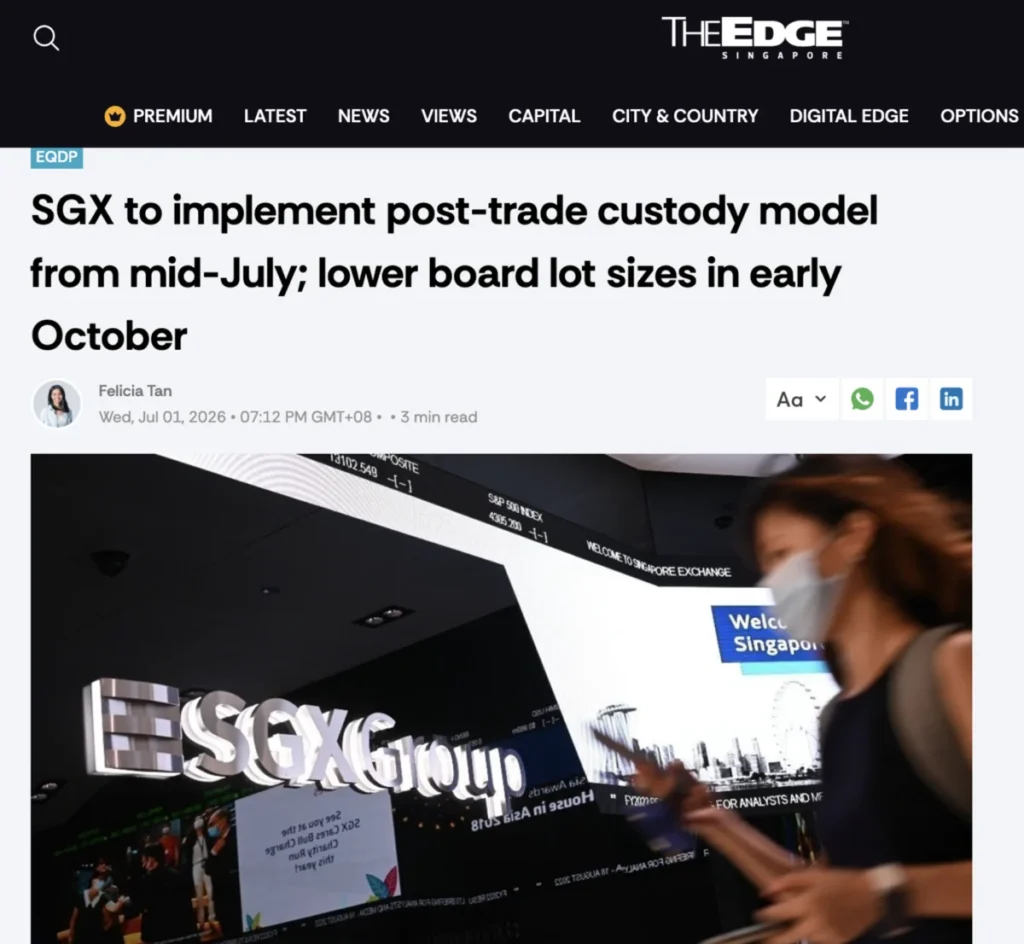
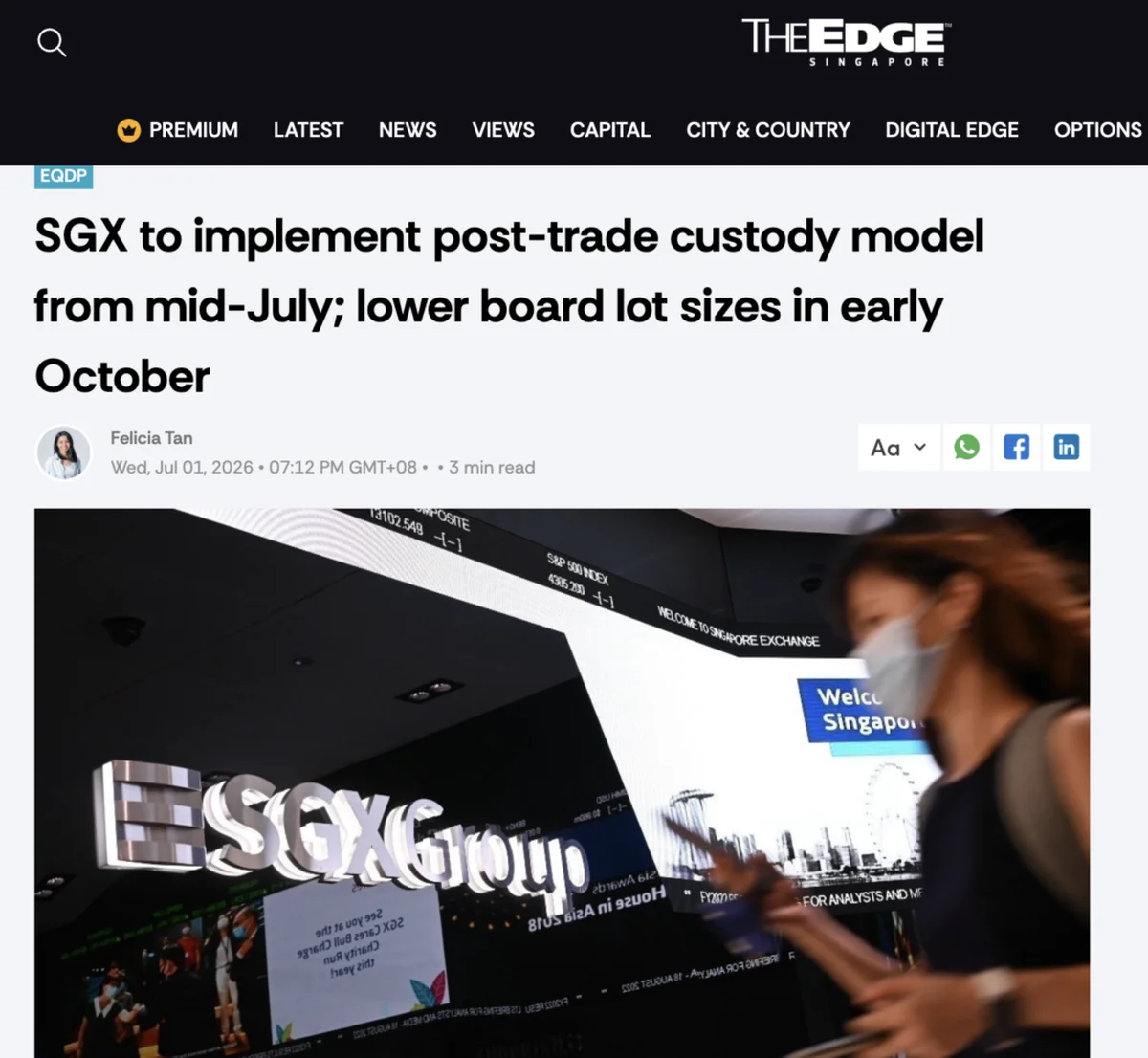
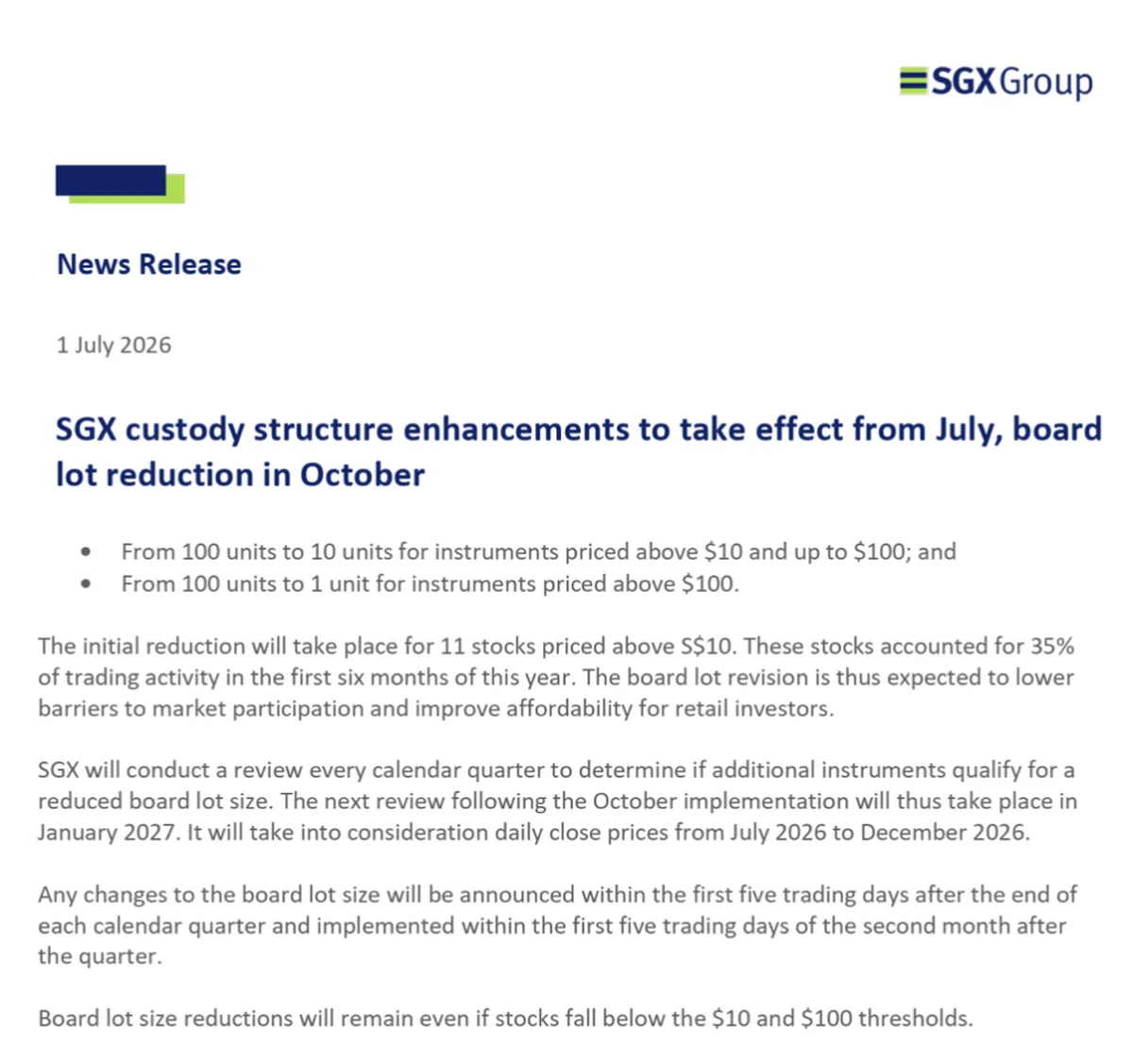
But starting in October 2026, that number drops to $650. SGX has announced it’s reducing the minimum board lot size — the smallest trading unit on the Singapore Exchange — from 100 shares down to just 10.
What is a board lot, anyway?
If you’re new to investing in Asian markets, “board lot” might sound like jargon. Think of it as the minimum purchase unit — similar to how US exchanges trade in round lots of 100 shares. On SGX, that minimum was already reduced from 1,000 units to 100 back in 2015. Now it’s going down to 10.
Why does the number matter? Because it sets your entry price floor.
The DBS example — and why $650 is a game changer
DBS shares are trading above $65 (SGD) right now. At 100-share lots, that means you need $6,500 to buy in. That’s a meaningful chunk of savings for most people — and it forces you to concentrate risk into one stock.
Imagine you have $10,000 to invest. Putting nearly two-thirds into DBS alone is risky. If that one bank stumbles, your whole portfolio takes the hit. With a 10-share minimum at $650, you can spread that same $10,000 across multiple positions instead.
I remember when I first started investing in 2014. DBS was around $15 per share, but the board lot back then was still 1,000 units — so I needed at least $15,000 to own it. I was effectively priced out.
Then SGX cut the lot size to 100 shares in 2015, and I finally bought my first tranche for under $1,500. As luck would have it, DBS cratered to below $14 shortly after, which is exactly when I scooped up those initial shares.
What you could do before October
If you don’t want to wait until the change takes effect, there are three alternatives already available:
ETFs tracking the Straits Times Index (STI). The Singapore banks make up more than 50% of the STI today, so an index ETF gives you indirect bank exposure without buying individual shares.
Thematic ETFs such as the Lion-OCBC Securities APAC Financials Dividend Plus ETF. These focus on regional financial stocks and can diversify beyond just Singapore.
Odd-lot buying through certain brokerages like moomoo Singapore. Odd lots let you buy fewer shares than a standard board lot, but they trade on a separate book — the SGX Unit Share Market — so liquidity can be thinner and prices slightly less favorable.
Which stocks are affected?
The change applies to 11 stocks priced above $10 (SGD). The full list hasn’t been published yet, but DBS, Keppel, and Venture Corporation have already been confirmed. I’d bet OCBC, UOB, SGX itself, and possibly ST Engineering are on it too.
Why this matters for your portfolio
This isn’t just about convenience — it’s about proper diversification. When the entry barrier is high, beginners either skip a stock entirely or over-concentrate in one position. Both are mistakes that compound over time.
I’m hopeful this change will bring more capital inflows into Singapore-listed companies, especially since many of them trade at valuations well below their US counterparts. There are still multi-baggers to be found on home ground — if you’re willing to look.
Start by checking your brokerage account for how much a single board lot costs for the stocks you’ve been watching. Then divide that number by 10. That’s the price you’ll pay starting in October. Small change, big difference.